


A reinspection is a short, focused follow-up visit where your home inspector rechecks only the items flagged in your first report to confirm the seller’s repairs were done right. It is not a second full inspection. It usually takes about an hour, costs far less than the first visit, and gives you written proof that promised fixes actually happened before you sign at closing. At America’s Choice Inspections, it is one of the simplest ways Charlotte and Triad buyers protect a major purchase.
Here is what a reinspection is, when you need one, what it covers, and how to schedule one that keeps your closing on track.
What Is a Reinspection?
A reinspection is a targeted, second visit from your home inspector. Instead of walking the whole property again, the inspector returns only to the areas that were flagged in your first report. Usually those are the repairs the seller agreed to make, like a damaged roof, a plumbing leak, or an unsafe electrical panel.
Think of it as a quality-control step. The first inspection found the problems. The seller agreed to fix them. The reinspection confirms the work was actually done, and done correctly. That matters because a repair can look finished at a glance and still be wrong. Fresh paint can hide a roof leak that was never sealed.
Here is how the two visits compare:
| Factors | Original Inspection | Reinspection |
|---|---|---|
| Scope | Whole property, top to bottom | Only the flagged items |
| Length | 2–4 hours | About 1 hour |
| Cost | Full inspection fee | Much lower, often a flat rate |
| Goal | Find problems | Confirm problems were fixed |
Why You Might Need a Reinspection
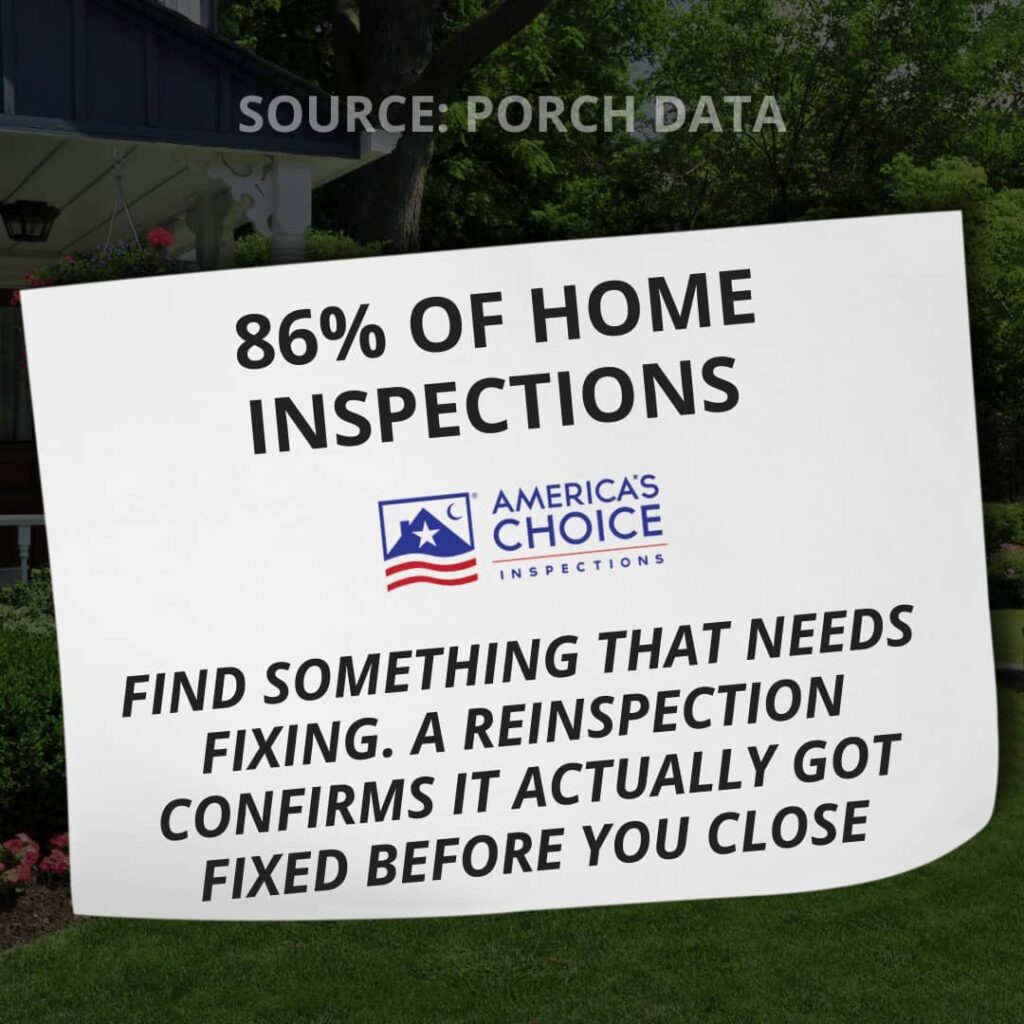
Not every purchase needs one, but a reinspection matters any time repairs are part of the deal. The core reason is simple: you want proof the seller did what they promised before the home becomes yours. A verbal “it’s all taken care of” is not the same as a professional confirming it in person.
Consider a reinspection when:
- The seller agreed to repairs. A reinspection verifies they followed through.
- Safety is involved. Faulty wiring, mold, or structural damage should be rechecked so they no longer pose a risk.
- Your lender or insurer requires it. Some ask for proof that repairs are complete before final approval.
- You may need to renegotiate. If work was skipped or done poorly, the report gives you leverage for a credit or a redo.
- You want peace of mind. Even when it is not required, verifying repairs helps you move in without second-guessing.
Most experienced agents in the Charlotte and Triad markets recommend a reinspection whenever a seller commits to repairs. The cost is small next to the price of finding an unfinished fix after closing.
What a Reinspection Covers
A reinspection focuses on the exact items listed in your first report, using the same tools and methods from the original visit. The scope depends on what was flagged, so a home with one roof issue looks very different from a home with a dozen mixed repairs.
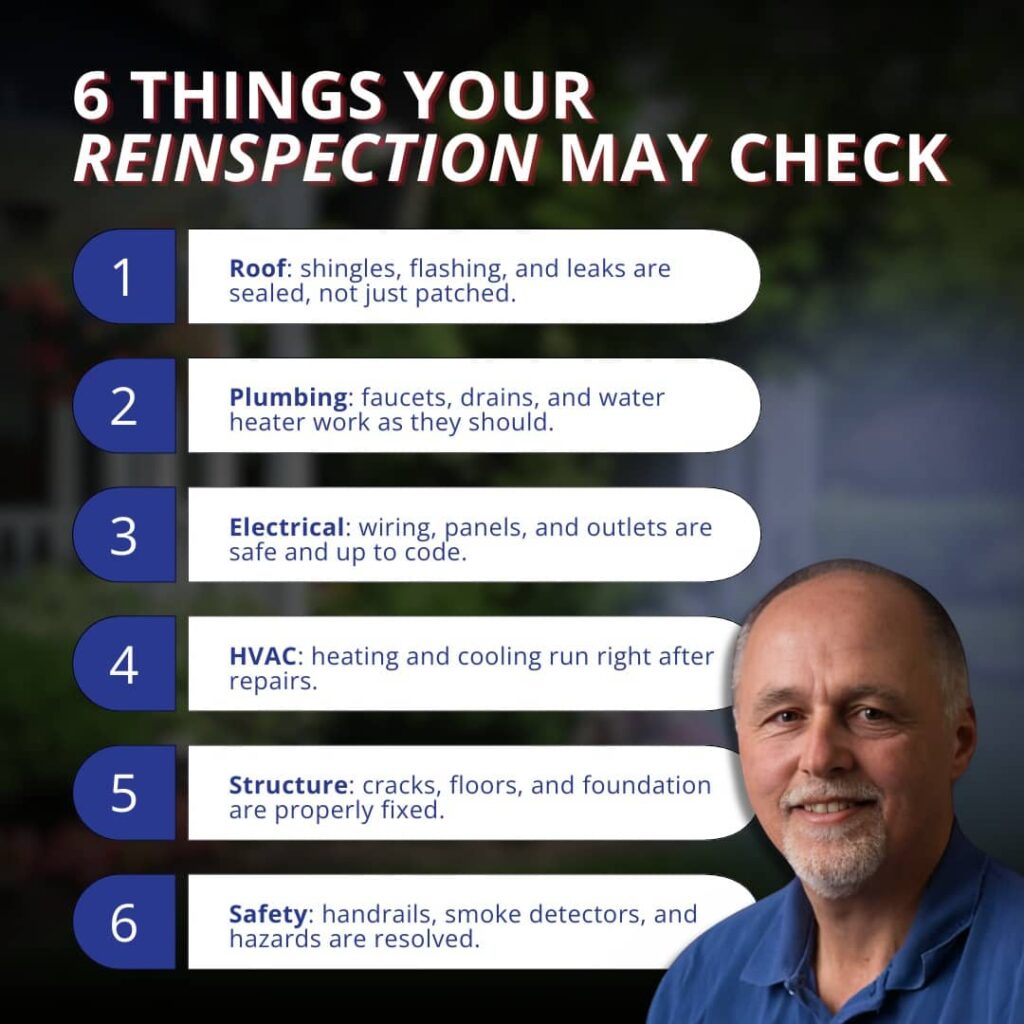
The inspector typically rechecks:
- Roof repairs — damaged shingles, flashing, or leaks, confirmed as properly sealed rather than patched over.
- Plumbing fixes — leaking faucets, slow drains, and water heaters, tested for normal function.
- Electrical work — exposed wiring, old panels, and dead outlets, verified as safe and up to code.
- HVAC repairs — heating and cooling systems, run again to confirm they hold up.
- Structural issues — wall cracks, sagging floors, and foundation movement, checked for proper reinforcement.
- Safety hazards — missing handrails or broken smoke detectors, confirmed as corrected.
Afterward, the inspector issues a follow-up report noting whether each item is fully resolved, partially resolved, or still a problem. That written record is what protects you at the closing table. If your first inspection was a general home inspection or a pre-listing inspection, the reinspection references that same report.
How to Prepare for a Reinspection
A little preparation helps the inspector work fast and gives you clear answers. Most of it comes down to getting the right paperwork into their hands before the visit, and making sure they can reach every area.
Before your reinspection:
- Gather repair documents. Ask the seller for invoices, work orders, or before-and-after photos, and share them in advance.
- Provide the original report. This lets the inspector reference exactly what was flagged.
- Confirm full access. Make sure the seller or listing agent can open every area being rechecked, including attics and crawl spaces.
- Name your priorities. Point out any repair you are especially worried about, like a major system or the structure.
- Attend if you can. Being there, or sending your agent, lets you ask questions in real time.
Our digital repair request tool makes it easy to track which items still need attention so everyone works from the same list.
When and How to Schedule a Reinspection
Timing is everything. Schedule the reinspection after the seller confirms repairs are finished, but leave yourself a buffer. Aim for at least three to five days before closing so you have room to act if something fails the recheck. Waiting until the day before leaves no time to fix a problem.
The process is short:
- Contact your original inspector. They already know the property, so the visit is faster and more accurate.
- Send the repair list. Include seller updates and receipts so they know what to verify.
- Coordinate access and timing. Confirm with the listing agent that the inspector can reach every area.
- Leave room for follow-up. A few days of cushion protects your closing date if a repair needs redoing.
America’s Choice Inspections serves buyers across Charlotte, Mooresville, Winston-Salem, and the surrounding areas, so the same team that ran your first inspection can usually handle the reinspection too.
Related Questions to Explore
How much does a reinspection cost? A reinspection costs much less than a full home inspection because it only covers the flagged items. The exact price depends on how many items need rechecking and the size of the home, so ask your inspector for a flat reinspection rate when you schedule.
How long does a reinspection take? Most reinspections take about an hour. A larger home or a long repair list can take longer, but it is still far quicker than the original visit because the inspector only revisits specific areas.
Who pays for the reinspection, the buyer or the seller? In most deals, the buyer pays, since the buyer requested the original inspection and benefits most from confirming the repairs. It can be negotiated, though, so review your purchase contract and talk it through with your agent.
What happens if repairs fail the reinspection? The follow-up report documents any incomplete or poor work in writing. From there you can ask the seller to redo it, request a credit at closing, or delay closing until it is resolved. The standards inspectors use to judge a repair are laid out in the InterNACHI Standard of Practice.
Can the same inspector do the reinspection? Yes, and it is usually the best choice. The original inspector already knows the home and the exact issues, so the recheck is faster and more consistent than starting fresh with someone new.
When to Call a Professional
Some buyers wonder if they can just verify the repairs themselves. For cosmetic items, a careful walkthrough may be enough. But anything involving safety, building code, or systems hidden behind walls needs a licensed inspector. You cannot reliably confirm that wiring is safe inside a wall, or that a roof was truly sealed, without the right training and tools.
Call a professional when the repairs touch:
- The roof
- The electrical system
- Plumbing
- HVAC
- The structure or foundation
A licensed inspector also gives you something a DIY walkthrough cannot: an objective, written report that lenders, insurers, and sellers will accept. The U.S. Consumer Financial Protection Bureau encourages buyers to understand a home’s condition before closing, and a documented reinspection is exactly that kind of protection.
Final Thoughts
A reinspection is your last chance to confirm that promised repairs were done right before the home, and every problem in it, becomes your responsibility. The visit is quick, and the cost is minor, but the protection is real. Keep three things in mind:
- A reinspection confirms repairs; it is not a second full inspection.
- Schedule it three to five days before closing so you have room to act.
- Trust a written report over a seller’s word.
If you need a thorough, on-time reinspection in the Charlotte or Triad area, America’s Choice Inspections is ready to help. Schedule your reinspection today and walk into closing with confidence.