

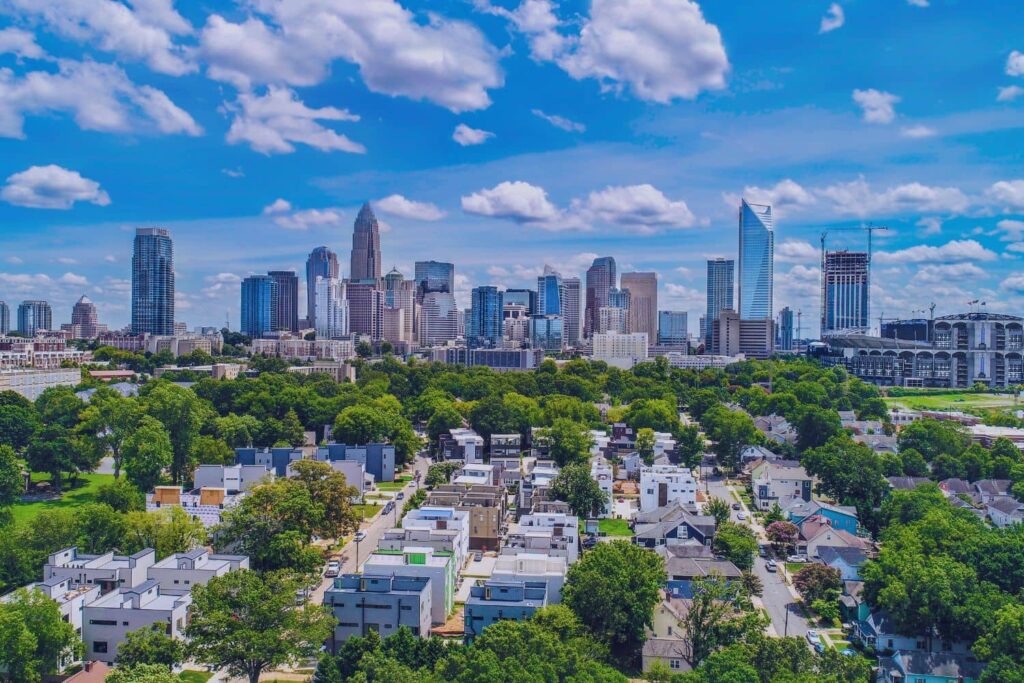
When you are buying, selling, or leasing commercial real estate in Charlotte, the condition of the building matters just as much as its location or square footage. Commercial property value is not a fixed number. It shifts based on what is inside the walls, above the ceiling tiles, and underneath the slab. A professional commercial inspection gives you the clearest picture of where that number actually stands before you sign anything.
Whether you are an investor eyeing an office building in Uptown, a small business owner taking over a retail strip in Ballantyne, or a property manager preparing to list an industrial space in Steele Creek, understanding how inspections influence commercial property value can make or break your deal.
Overview of Commercial Property Value
Commercial property value is the estimated market worth of a non-residential building or property.
Unlike residential real estate, which is often compared to nearby home sales, commercial value is typically driven by income potential, physical condition, location, and the cost to replace or repair major systems.
Appraisers and buyers use several approaches to determine commercial value:
| Approach | How It Works | When It Is Used |
| Income Approach | Value based on the rental income the property generates | Most common for investment properties |
| Sales Comparison | Compared to recent sales of similar commercial properties | Used when comparable sales exist |
| Cost Approach | Land value plus cost to rebuild minus depreciation | Useful for newer or specialized buildings |
The physical condition of the building is a major factor across all three methods. Deferred maintenance, failing systems, and code violations all push value down. A building in strong physical condition commands more, whether you are calculating cap rates, replacement costs, or listing price.
This is exactly where commercial inspections enter the picture.
What Does a Commercial Inspection Cover?
A commercial property inspection is a detailed, visual assessment of the building’s major systems and structural components. At America’s Choice Inspections, commercial assessments follow the ASTM E2018-15 standard for Property Condition Assessments, which is the recognized industry protocol for commercial due diligence.
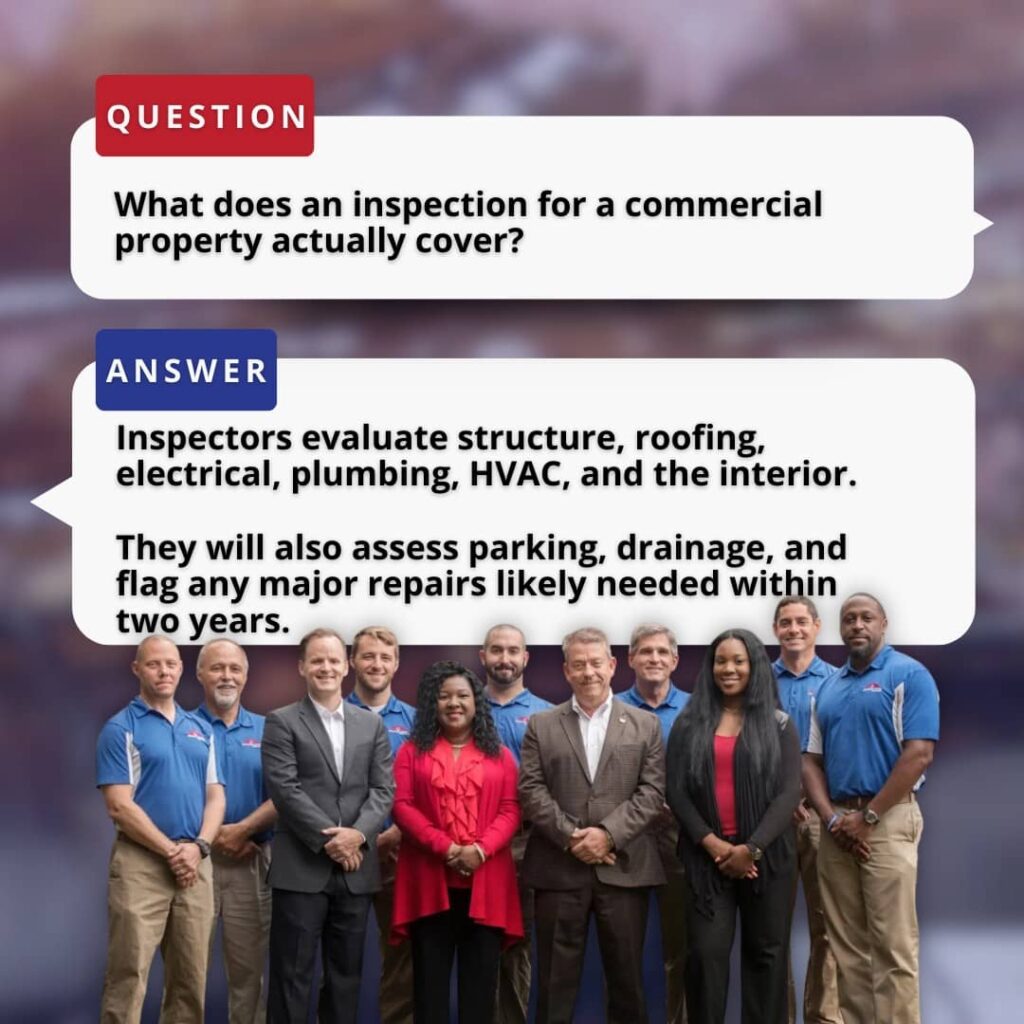
A thorough commercial inspection typically evaluates:
- Structural components: Foundation, framing, exterior walls, and load-bearing elements
- Roofing systems: Membrane condition, drainage, flashing, penetrations, and signs of ponding
- Electrical systems: Service panels, wiring type and condition, grounding, and safety compliance
- Plumbing: Supply lines, drain lines, fixtures, water heaters, and visible signs of leaks
- HVAC systems: Heating and cooling equipment, ductwork, ventilation, and the age of units
- Interior conditions: Ceilings, flooring, walls, windows, doors, and signs of moisture intrusion
- Parking lots and site drainage: Pavement condition, grading, and stormwater management
- Accessibility considerations: ADA-related observations that may impact compliance
One detail that sets America’s Choice apart: each commercial inspection report includes the estimated cost of any major component the inspector believes will need to be repaired or replaced within two years, when that cost is likely to exceed $3,000.
That kind of cost projection is not standard everywhere, and it gives buyers and investors a much clearer sense of what they are walking into.
How a Commercial Inspection Affects Property Value
The inspection report is one of the most powerful documents exchanged during a commercial real estate transaction. It does not just confirm or deny the asking price. It creates room for negotiation, drives repair decisions, and influences how quickly a deal closes.
Here is how inspection findings typically influence commercial property value at different deal stages:
Before Listing (Seller-Side Inspections)
Sellers who order a pre-listing commercial inspection gain a major advantage. You know exactly what the inspector will find before the buyer’s team does. That gives you the option to make repairs proactively, adjust your asking price based on actual condition data, or prepare thorough disclosures that build buyer confidence. A clean, well-documented inspection report can justify a higher asking price and reduce the chance of a deal falling apart late in the process.
In Charlotte’s competitive commercial market, where development pressure from SouthPark to the University City corridor keeps buyer activity high, sellers who come to the table with inspection documentation tend to move properties faster and with fewer surprises.
During Due Diligence (Buyer-Side Inspections)
For buyers, the inspection during due diligence is a non-negotiable step. This is your opportunity to verify that the property’s condition matches what you paid for. If the inspection uncovers significant issues, you have options: renegotiate the price, request credits at closing, require the seller to complete repairs, or walk away entirely if the findings are severe.
Consider a scenario where a buyer is acquiring a retail building on South Boulevard. The inspection reveals that the HVAC units are at the end of life and the roof membrane has active moisture intrusion. Those are not small issues. The cost to replace a commercial HVAC system and re-roof a mid-sized building in the Charlotte area can easily run into six figures.
Without the inspection, the buyer absorbs those costs after closing. With the inspection, they have documentation to support a price reduction or repair credit.
For Lenders and Investors
Many commercial lenders require a Property Condition Assessment (PCA) as part of the loan approval process. This is especially common for SBA loans, CMBS financing, and investment acquisitions. The inspection report feeds directly into the lender’s risk assessment and can affect loan terms, required reserves, or whether financing is approved at all.
Investors managing multi-unit commercial properties, apartment complexes in areas like NoDa or Plaza Midwood, or industrial holdings in the I-85 corridor near Concord need reliable condition data to forecast capital expenditures and protect the long-term value of their portfolio.
Inspection Issues That Drag Down Commercial Value
Not all inspection findings carry equal weight. Some are maintenance items that get addressed quickly. Others represent systemic problems that significantly impact value and, in some cases, make a property harder to finance or insure.
The issues that tend to have the biggest negative effect on commercial property value include:
1. Roof Deterioration
Flat or low-slope roofs are common on commercial buildings, and they require regular maintenance. Ponding water, failing seams, and deteriorated membrane systems are costly to repair and signal to buyers that deferred maintenance is a pattern.
A compromised roof also opens the door to moisture intrusion, which creates secondary damage to insulation, ceilings, and structural components.
2. Electrical Code Violations and Outdated Wiring
Outdated electrical panels, improper grounding, aluminum wiring in older buildings, and code violations are both safety hazards and insurance liabilities. These findings frequently delay closings and require attention before a lender will approve financing.
3. HVAC Systems at or Near End of Life
Commercial HVAC systems are expensive. When inspection reports flag aging units, buyers and lenders take notice. Proactive documentation of HVAC condition, age, and expected service life is important in any commercial transaction.
4. Structural Concerns
Foundation settlement, visible cracking in load-bearing walls, or evidence of structural modification without proper reinforcement all raise serious questions about a building’s integrity. These findings typically require follow-up evaluation by a licensed structural engineer.
5. Moisture and Mold
Moisture intrusion is one of the most common drivers of value reduction in commercial properties across the Carolinas. Charlotte’s climate, with warm, humid summers and significant seasonal rainfall, creates conditions where moisture problems develop inside buildings that appear fine from the outside. Inspectors look for signs of active leaks, past water damage, and conditions that could lead to mold growth.
6. Environmental and Hazardous Material Concerns
Older commercial buildings may contain asbestos-containing materials, lead-based paint, or other hazardous substances.
While a standard commercial inspection does not include environmental testing, findings that suggest these conditions may be present can lead to further testing recommendations that affect both value and timeline.
What Happens After the Report?
The inspection report is not the end of the process. It is the beginning of an informed decision. After receiving the report, buyers and sellers typically take one of several paths:
- The seller agrees to make repairs before closing
- The buyer requests a price reduction or closing credit
- Both parties agree on an “as-is” price that reflects the condition documented
- The buyer requests a specialist follow-up (structural engineer, environmental consultant, MEP contractor) before proceeding
- In some cases, the findings are significant enough that one party exits the deal entirely
Having a clear, well-written inspection report from a qualified commercial inspector gives everyone at the table a shared understanding of the facts. That transparency is good for buyers, sellers, and the integrity of the deal.
Related Questions to Explore
How is a commercial inspection different from a residential inspection? Commercial inspections are broader in scope and typically take longer. These buildings have more complex systems, larger footprints, and different regulatory considerations than residential properties. Commercial inspections follow the ASTM E2018-15 standard rather than residential protocols. The reports are also more detailed, often including cost projections for major repairs and replacement components.
Can a commercial inspection be used to negotiate a lower price? Yes, and this is one of the primary reasons buyers order them. If the inspection uncovers issues that were not disclosed or reflected in the asking price, the report provides documented grounds for renegotiation. This is standard practice in commercial real estate transactions.
How long does a commercial inspection take? Timing varies based on the size and complexity of the property. A small retail space may take two to three hours. A larger office building, warehouse, or multi-tenant property could require a full day or more. Report delivery typically follows within a few business days.
What types of commercial properties does America’s Choice inspect? America’s Choice handles a wide range of commercial property types, including office and industrial buildings, retail and hospitality spaces, and condos and apartment complexes throughout Charlotte, Winston-Salem and the Triad, Mooresville, Rock Hill, and surrounding communities.
Should I get a commercial inspection before renewing a lease? This is an often-overlooked application. Tenants preparing to renew long-term commercial leases benefit from knowing the current condition of the space they are committing to. If systems are aging or deferred maintenance is visible, that information can support lease negotiation or inform decisions about tenant improvement allowances.
When to Call a Professional
If you are entering a commercial real estate transaction in Charlotte or anywhere in the greater Mecklenburg County area, scheduling a professional commercial inspection before you are too far into the deal is the right move. The earlier you have condition data, the more leverage and flexibility you have.
You should also reach out to a qualified commercial inspector if you are:
- Refinancing a commercial property, and your lender requires an inspection first
- Managing an older commercial building and planning capital improvement budgets
- Preparing a property for sale, and want to understand its condition before listing
- Evaluating a leased space as part of a long-term business decision
- Inheriting or acquiring commercial property as part of an estate or portfolio transaction
America’s Choice Inspections has been serving Charlotte and the surrounding region since 1998, following ASTM standards to deliver detailed, professional assessments that hold up in negotiations and due diligence processes.
Conclusion
Commercial property value and building condition are connected at every stage of a transaction. A thorough inspection protects buyers from overpaying, helps sellers position their properties accurately, and gives lenders the confidence they need to move forward. In a market like Charlotte, where commercial development continues to expand across neighborhoods old and new, having clean, credible inspection documentation is not just a smart move. It is a competitive advantage.
If you are buying, selling, leasing, or financing commercial real estate in the Charlotte area, get in touch with our team today or schedule your commercial inspection online whenever you’re ready.