

Buying or leasing commercial real estate in Charlotte is a significant investment. Whether you’re looking at an office building in Uptown, a retail strip near Mooresville, or an industrial space close to the airport corridor, a commercial property inspection report is one of the most important steps in your due diligence process.
For many buyers and investors, the inspection report itself can feel like a lot to unpack. It’s detailed, technical, and longer than anything you’d get on a residential property. Knowing what goes into it ahead of time helps you read it smarter, negotiate more effectively, and move through the transaction with confidence.
What Is a Commercial Property Inspection Report?
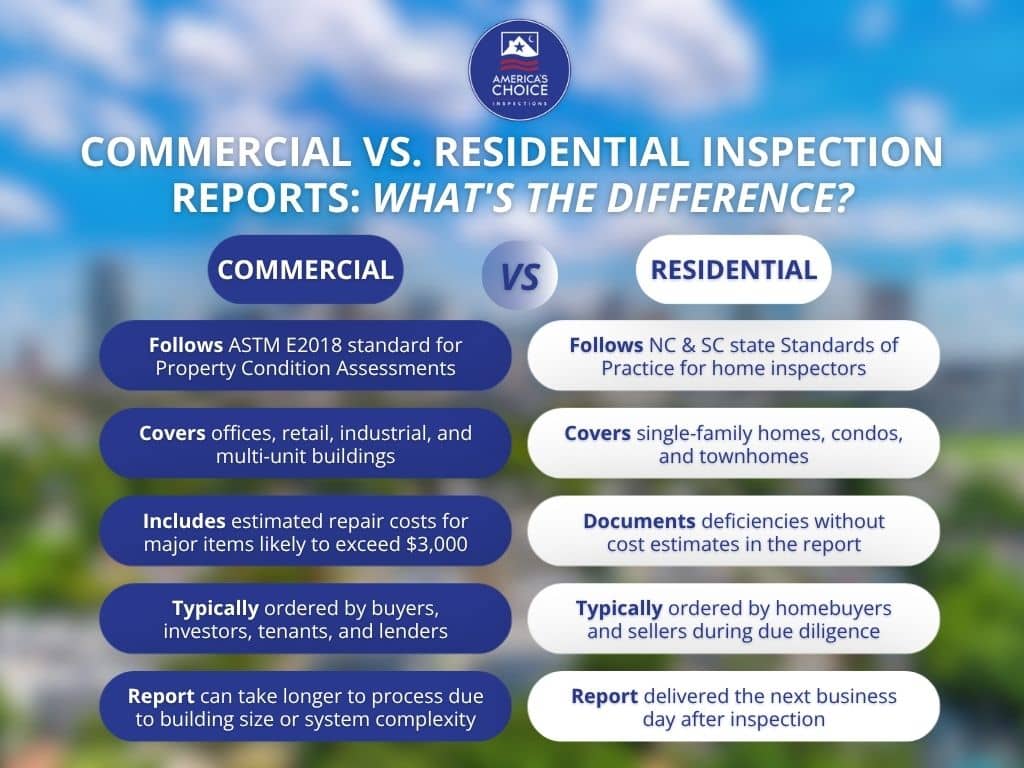
A commercial property inspection report details the physical condition of a building after a licensed inspector evaluates it from top to bottom. It identifies deficiencies across the structure and its major systems, and often includes estimated repair or replacement costs for significant findings.
Commercial reports are considerably more in-depth than residential inspection reports. Larger buildings carry more complex systems, more components, and different liability standards. At America’s Choice, commercial inspections follow the ASTM standard E2018-15 protocol for Property Condition Assessments. That standard ensures consistency, thoroughness, and documentation that holds up during negotiations and due diligence.
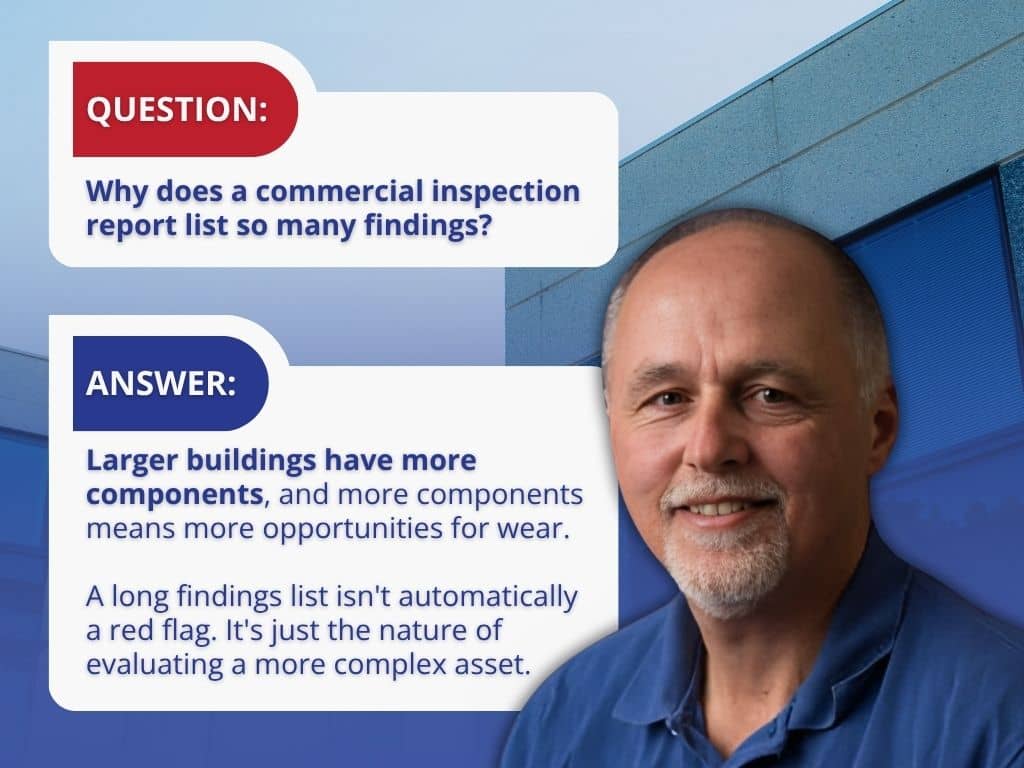
First-time commercial buyers are often surprised by the volume of findings, even on well-maintained properties. That’s not necessarily a red flag. It’s just the nature of evaluating a larger, more complex asset.
What the Report Covers Section by Section
Here’s a breakdown of what you’ll typically find inside a commercial property inspection report.
Site and Exterior
The report starts outside. Inspectors assess parking areas, drainage, walkways, fencing, exterior lighting, and grading that affects how water moves around the building. In the Charlotte area, heavy seasonal rain makes drainage a frequent finding and one worth taking seriously.
Poor grading or clogged drainage can accelerate foundation problems and cause moisture intrusion that doesn’t show up until it becomes a much bigger issue.
Structural Components
This section covers the foundation, floor systems, load-bearing walls, columns, and roof framing. Inspectors look for settlement, cracking, signs of movement, and evidence of past repairs. Structural findings are often the most significant in terms of cost and their potential impact on financing.
If a report flags foundation concerns, schedule a reinspection after repairs are completed before moving forward.
Roofing Systems
Commercial roofs are typically flat or low-slope, with HVAC penetrations and multiple drainage points. They’re expensive to replace and prone to issues that aren’t visible from street level. Inspectors document roofing material type, approximate age, flashing conditions, drainage performance, and visible damage like blistering, ponding, or compromised seams.
Drone roof inspections add significant value here, delivering a thorough look at areas that would otherwise require difficult or risky access on large commercial rooftops.
Plumbing Systems
Inspectors evaluate water supply lines, drain lines, water heaters, visible piping conditions, and signs of active or past leaks. In commercial buildings, this can also include fire suppression lines, multiple restroom banks, and commercial-grade water heating systems.
The report notes piping material types, approximate ages where visible, and any evidence of corrosion or improper past repairs. If the building uses a private water supply, the well and water quality conditions may factor into the evaluation as well.
Electrical Systems
Electrical findings rank among the most commonly flagged items in commercial inspection reports. Inspectors cover the service entrance, main panel, branch circuit wiring, panel labeling, outlet and switch conditions, and GFCI protection where required.
Older commercial buildings across the Charlotte metro frequently have outdated panels, ungrounded circuits, or wiring that no longer meets current code. These findings don’t always mean the building is unsafe, but they represent real costs a buyer needs to factor into any offer.
HVAC Systems
Commercial HVAC systems vary widely in type and complexity. The report documents unit types, approximate age, visible condition, filter status, thermostat function, and signs of deferred maintenance or inadequate capacity.
Many commercial buildings in the region run rooftop package units, split systems, or aging equipment approaching the end of life. HVAC replacement in a commercial setting can run well into the tens of thousands of dollars, so this section deserves close attention regardless of how new the building looks from the outside.
Interior Conditions
Inspectors document floors, walls, ceilings, windows, and doors, noting staining, water damage, mold-like growth, structural cracking, and deferred maintenance that could point to larger problems.
Thermal imaging inspections add meaningful value here. Infrared technology detects moisture intrusion behind walls and ceilings that look fine to the naked eye, giving buyers a more complete picture of water-related issues before closing.
How Cost Estimates Work in the Report
One thing that sets America’s Choice commercial inspections apart is the inclusion of estimated repair costs for major components. When an inspector identifies a major component likely to need repair or replacement within two years and the estimated cost exceeds $3,000, that figure goes into the report.
This gives buyers and investors a practical financial picture alongside the deficiency list. It’s a meaningful tool at the negotiating table and helps prioritize what needs immediate attention versus what to plan for post-closing.
For investors comparing multiple properties, having that cost context built into the report speeds up the decision-making process significantly.
Commercial Inspection vs. Property Condition Assessment
These terms come up together often and are sometimes used interchangeably. Here’s the quick distinction:
| Feature | Commercial Inspection | Property Condition Assessment |
|---|---|---|
| Primary Use | Buyer due diligence | Lender/investor due diligence |
| Follows ASTM Standard? | Often yes | Yes (ASTM E2018) |
| Typically Required By | Buyers, investors | Lenders, SBA loans |
A Property Condition Assessment is the more formal version, often required for financing. A commercial building inspection is typically buyer-initiated, focused on the physical conditions that matter most to someone making a purchase or lease decision.
In many transactions, both are completed, and the findings from each inform the other.
What Is Not Included?
Environmental concerns like mold, asbestos, radon, lead paint, and underground storage tanks fall outside the scope of a standard commercial inspection. These require separate testing or environmental assessments.
A thorough inspection will flag conditions during the walkthrough that suggest additional testing is warranted. From there, specialty services like mold testing, radon testing, or other environmental evaluations can fill in the gaps before closing.
Related Questions to Explore
Does a commercial inspection cover pool or sprinkler systems on the property? Pools, spas, and irrigation or sprinkler systems typically fall outside the scope of a standard commercial inspection. Separate specialty inspections can evaluate these components, which is worth factoring in for properties where those systems represent a meaningful part of the asset or ongoing maintenance cost.
Is mold testing part of a commercial inspection? Mold testing is a separate service. If an inspector spots conditions during a commercial walkthrough that suggest moisture intrusion or potential mold growth, they’ll typically recommend mold testing as a follow-up before the transaction moves forward.
What is the difference between a commercial inspection and a new construction inspection? New construction inspections confirm that work meets code and quality standards at key phases, before crews cover it up or a certificate of occupancy is issued. A commercial property inspection evaluates an existing building’s current condition for buyers or tenants in due diligence. The intent, timing, and scope are meaningfully different.
What happens if serious issues turn up in a commercial inspection report? It depends on the transaction. Some buyers use the report to renegotiate the price or request seller credits. Others bring in specialists for further evaluation or reinspection before deciding. In some cases, the findings are significant enough that a buyer walks away. The report gives you documented evidence and leverage to make an informed call.
When to Call a Professional
Don’t wait until you’re deep into a transaction to schedule an inspection. There are several points in the commercial real estate process where bringing in a professional inspector makes a real difference:
- You’re under contract and entering due diligence: This is the most common and important window. Schedule as early in the due diligence period as possible so findings have time to inform negotiations.
- You’re evaluating a building before making an offer: A pre-offer inspection makes sense for properties with visible deferred maintenance, significant age, or conditions that raise questions. The inspection cost is minor compared to what an overlooked issue can cost after closing.
- You’re considering a long-term or triple-net lease: Tenants responsible for maintenance under lease terms have a real stake in knowing the condition of major systems before signing.
- You’re an investor comparing multiple properties: Consistent, standardized inspection reports across properties make side-by-side evaluation more straightforward and help you prioritize where your capital goes.
- Your lender requires a Property Condition Assessment: If financing is involved, a formal PCA following ASTM standards is often required. Getting ahead of this early prevents delays at closing.
In competitive commercial markets across Charlotte, Winston-Salem, and the broader Piedmont region, having a trusted inspector ready to move quickly can be the difference between a smooth closing and a costly surprise.
Conclusion
A commercial property inspection report gives you a clear, documented picture of what you’re actually getting before you close. Understanding what it covers, how to interpret the findings, and when to bring in additional testing puts you in a much stronger position at every stage of the transaction.
America’s Choice Inspections has been serving Charlotte and the surrounding region since 1998, offering commercial inspections that follow ASTM standards and include cost estimates for major repair items. Schedule your inspection today to move through due diligence with confidence.