


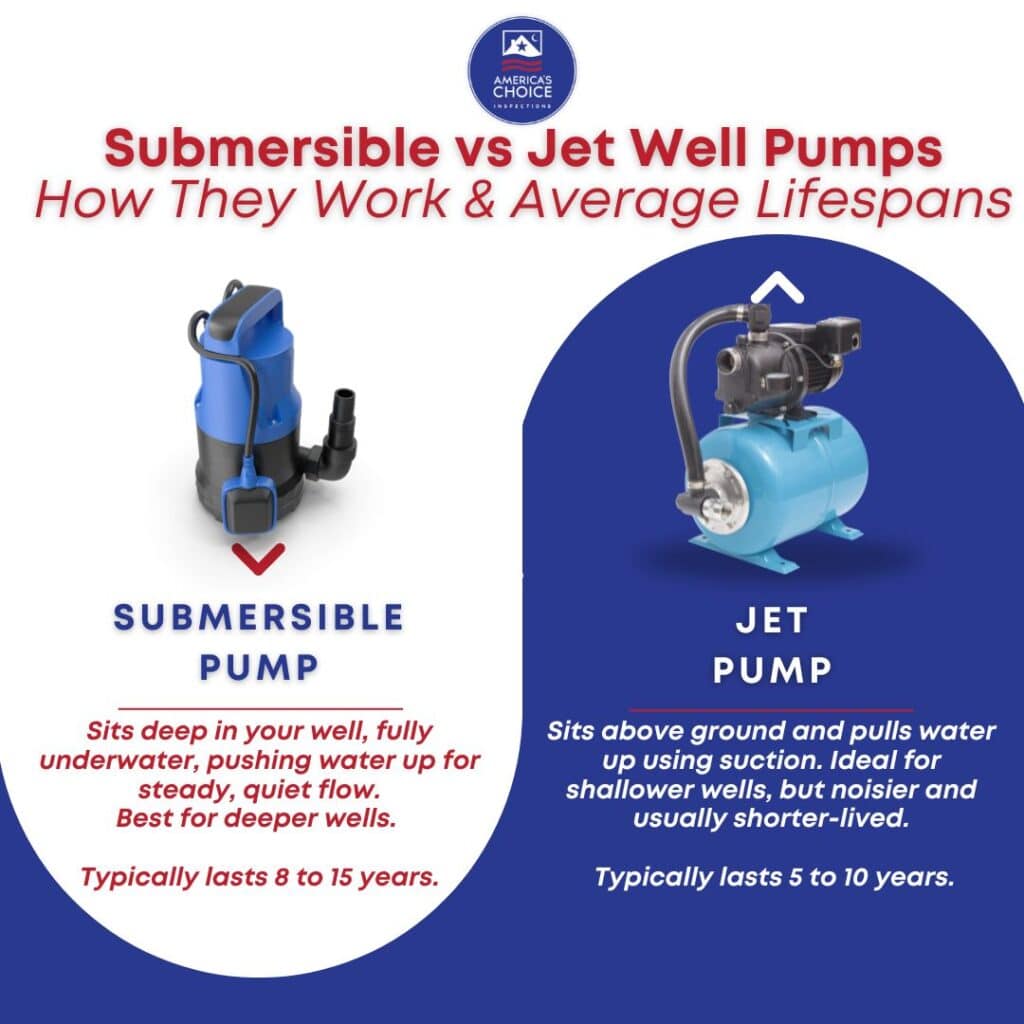
A well pump usually lasts 8 to 15 years. Submersible pumps, which sit deep inside the well, tend to last the longest, at about 8 to 15 years. Jet pumps, which sit above ground, often last around 5 to 10 years. How long yours lasts comes down to your water quality, how often the pump runs, how well it was sized and installed, and how you maintain it. Across the Greater Charlotte and Triad area, many homes outside city water lines rely on private wells, and local water conditions play a real role in how long a pump holds up.
Below you will find the average lifespan by pump type, what wears a pump out early, the warning signs that yours is failing, and simple steps to get more years out of it.
How Long Does a Well Pump Last on Average?
Most well pumps last 8 to 15 years. Some well-maintained pumps with clean water and the right size keep running for 20 years or more, while pumps fighting sandy or mineral-heavy water can wear out in well under a decade.
The type of pump makes the biggest difference:
| Pump type | How it works | Typical lifespan |
|---|---|---|
| Submersible pump | Sits underwater deep in the well and pushes water up | 8 to 15 years |
| Jet pump | Sits above ground and pulls water up by suction | 5 to 10 years |
Submersible pumps usually last longer because the surrounding water keeps the motor cool and protected. Jet pumps work harder to pull water to the surface, so the motor sees more wear and tear. Both shallow-well and deep-well jet pumps fall in that same general range, with the hardest-working units landing at the lower end.
What Affects How Long a Well Pump Lasts?
A pump’s lifespan is the result of several things working together, not one single factor.
- Water quality. Sediment, sand, iron, and hard-water minerals are the biggest enemies of a well pump. Grit acts like sandpaper on the motor and bearings, and mineral buildup forces the pump to work harder. Acidic, low-pH water is another quiet threat, because it corrodes the metal parts of the pump and pressure tank over time. Testing your water and adding the right filtration protects the pump. The EPA recommends that private well owners test their water at least once a year.
- How often it runs. Every time the pump turns on and off counts as one cycle, and cycling is what wears a pump down over time. A pump that short cycles (turns on and off rapidly) can lose years of life. A healthy pressure tank smooths out demand and reduces cycling.
- Pump sizing. A pump that is too small for the home runs almost constantly to keep up, which burns it out early. This often happens after a remodel adds bathrooms, an irrigation system, or other new water demand.
- Installation quality. A pump set at the wrong depth or wired incorrectly fails sooner. Professional installation pays off across the life of the system.
- Power surges. Lightning and electrical surges can ruin a pump motor in an instant. A surge protector on the well circuit is cheap insurance.
Local Water Conditions in the Charlotte and Triad Area
If your home sits outside city water in Union, Iredell, Cabarrus, Rowan, or Gaston County, your well water has a few regional quirks worth knowing. North Carolina’s health department reports that many wells in the state carry iron, manganese, and low pH, and Piedmont groundwater often runs on the acidic side. That matters for your pump because acidic water slowly corrodes its metal components, and iron and sediment grind on the moving parts. Both push a pump toward the shorter end of its lifespan. A water test tells you what you are dealing with, and an acid neutralizer or iron filter can take that strain off the system. If you have not had your water checked lately, see whether you should also test your well water for radon, since contaminants move through the same well. For a full breakdown of what is in your water, well water quality testing is the place to start.
Signs Your Well Pump Is Failing
Catching a failing pump early can save you from a sudden loss of water and a much larger repair bill. Watch for these warning signs:
- Dropping water pressure. Weaker showers or faucets that only trickle often mean the pump is struggling to keep up.
- Sputtering or spitting air. Bursts of air from the faucet can mean the pump is pulling air instead of water.
- Dirty, sandy, or cloudy water. Sediment showing up in your water can mean the pump is sitting too low or starting to wear out.
- Strange noises. Clicking, grinding, or rattling from the pump or pressure tank points to worn internal parts.
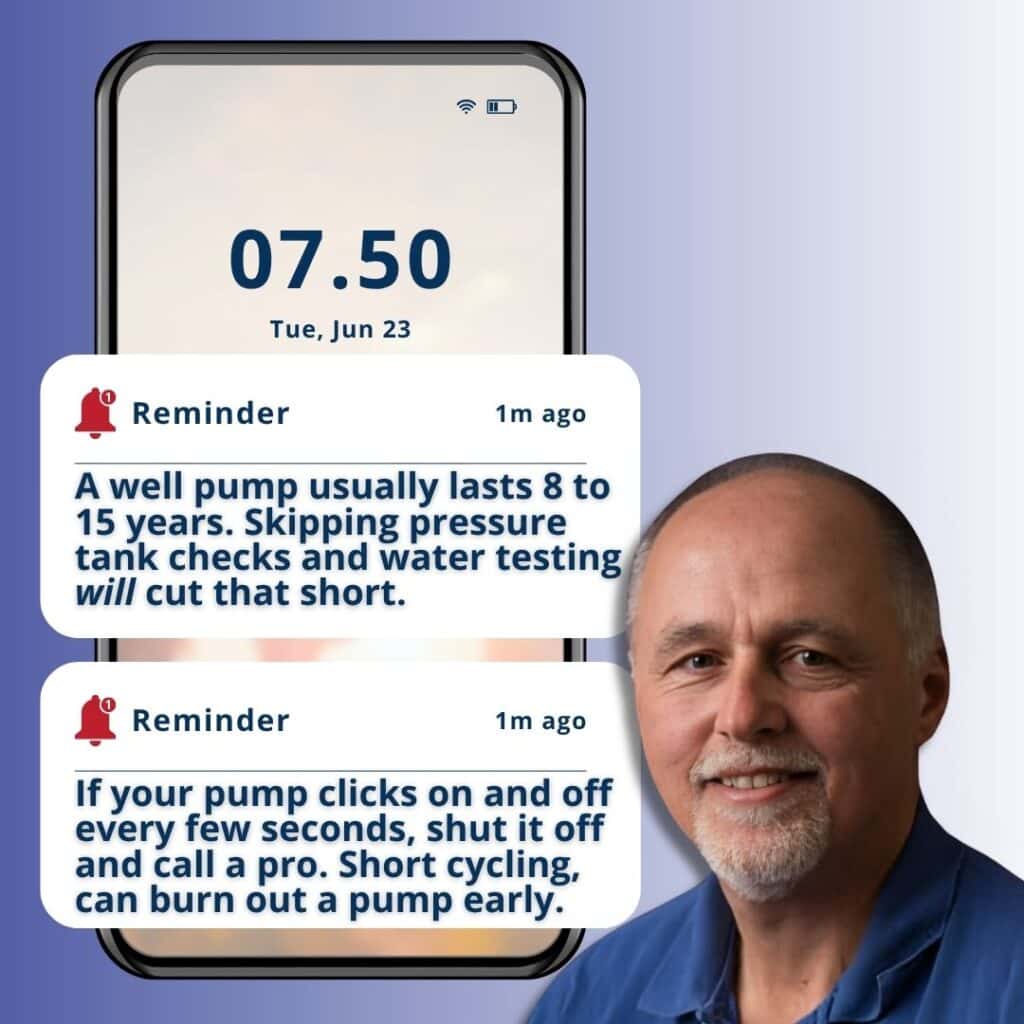
- Short cycling. A pump that clicks on and off every few seconds is a classic sign of a pressure tank or pump problem.
- Rising electric bills. A pump running longer or more often than usual shows up on your power bill.
- No water at all. The clearest sign of trouble. Before assuming the worst, check the breaker and the pressure switch, since those are simple resets.
How to Make Your Well Pump Last Longer
You cannot control everything, but steady care adds years to a pump’s life.
- Schedule a yearly well check. An annual inspection catches small problems before they turn into failures.
- Test your water on a schedule. North Carolina’s health department recommends testing private well water yearly for bacteria and every two years for metals like lead and copper. High iron, sediment, or low pH all shorten pump life.
- Treat corrosive or hard water. If your water tests acidic or iron-heavy, an acid neutralizer or filter protects the pump, pressure tank, and your plumbing.
- Keep the pressure tank healthy. A waterlogged or low-pressure tank makes the pump short cycle. Check the tank’s air pressure once a year.
- Right-size the system. If your household water demand has grown, have a pro confirm the pump still fits the home.
- Protect against surges. Add a surge protector to the well’s electrical circuit.
Well Pump vs Pressure Tank vs the Well Itself
People often mix up the lifespan of the pump with the lifespan of the well. They are different parts of the same system, and each one lasts a different amount of time.
| Component | Typical lifespan |
|---|---|
| Submersible well pump | 8 to 15 years |
| Jet well pump | 5 to 10 years |
| Pressure tank | 7 to 12 years |
| The well itself (properly drilled) | 40 to 50 years or more |
The well, meaning the drilled hole, casing, and screen, can last 40 to 50 years or longer. The pump and pressure tank are the parts that wear out and get replaced during that time. A pressure tank’s weak point is the internal bladder.
When it fails, the tank can no longer hold steady pressure, the pump starts short cycling, and the pump wears out faster. A failing pressure tank can shorten the life of an otherwise healthy pump, which is why the two are worth checking together.
Related Questions to Explore
How long does a submersible well pump last?
A submersible well pump typically lasts 8 to 15 years. Because it sits underwater, the surrounding water cools and protects the motor, which is why submersibles usually outlast above-ground jet pumps. Clean water and a properly sized system can push that closer to 20 years.
How long does a well pressure tank last?
A well pressure tank usually lasts 7 to 12 years. The bladder inside is the part that fails first. Once it stops holding pressure, the pump short cycles, so replacing a worn tank protects your pump.
How long does a water well last?
A properly drilled and maintained residential well can last 40 to 50 years or more. The well outlasts its components, so plan to replace the pump and pressure tank a few times over the life of the well.
How much does it cost to replace a well pump?
Costs vary by pump type, well depth, and labor, so a professional assessment of your specific system is the best starting point. An inspection can also confirm whether the pump truly needs replacing or whether the real issue is the pressure tank, the pressure switch, or wiring, which are cheaper fixes.
How long can a well pump run continuously?
A well pump is not built to run nonstop. If yours runs constantly and never shuts off, that usually points to a leak, a waterlogged pressure tank, a dropping water level, or a pump that is failing or undersized. Continuous running wears the motor quickly and should be checked right away.
When to Call a Professional
Some well issues have simple fixes, like resetting a tripped breaker or the pressure switch. Others need a trained eye. Call a professional if you lose water entirely, see a sudden drop in pressure, notice sand or cloudiness in your water, or hear your pump short cycling.
If you are buying a home with a private well anywhere around Charlotte, Mooresville, or the Triad, have the well and pump checked before closing. A standard home inspection does not test the well pump or water quality, so a dedicated well inspection is a separate and important step. It is worth knowing what a well inspection can reveal about your water quality before you commit to a property.
The team at America’s Choice Inspections can check your well pump, pressure tank, and water quality so you know exactly what you are buying.
Conclusion
Most well pumps last 8 to 15 years, but the real number depends on your water, your pump type, and how well the system is cared for. In the Charlotte and Triad area, acidic and iron-heavy well water can shorten that span, so testing and treating your water is one of the best things you can do for your pump. Watch for the warning signs, keep up with yearly maintenance, and stay ahead of small problems before they turn into a no-water emergency.
If your pump is getting up there in age or showing signs of trouble, schedule a well and water quality inspection with America’s Choice Inspections and get a clear picture of your system’s health.