

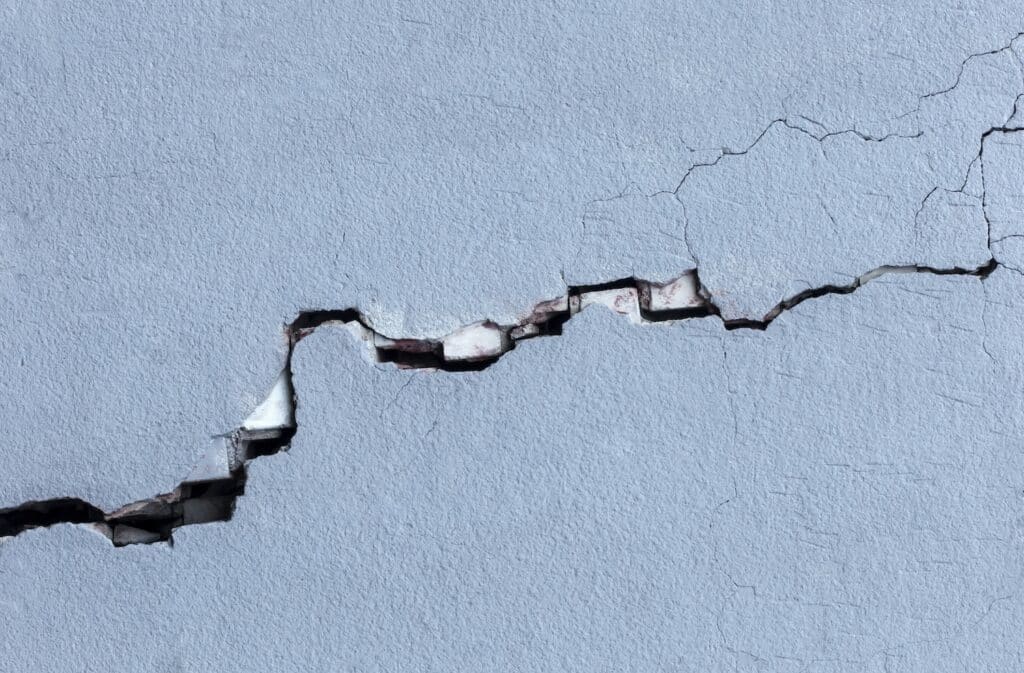
Foundation problems rarely announce themselves loudly. No alarm goes off, no obvious collapse. Most of the time, the signs show up quietly. A door that starts sticking. A crack above a window frame. Floors that feel slightly off. By the time most homeowners put it all together, the damage has been building for months (sometimes years).
The good news: foundation issues caught early are significantly cheaper to deal with. Addressing a problem early can mean the difference between a manageable repair and a five-figure overhaul. Knowing what to look for and getting a professional home inspection before or during a purchase is one of the best steps you can take.
Why Charlotte Homes Are More Susceptible
Not every region deals with foundation problems the same way. Charlotte and the surrounding Piedmont sit on Cecil clay, which is an expansive red clay soil. That geology plays a direct role in foundation movement throughout the area.
This type of soil expands when it absorbs water and contracts and pulls away when it dries out. That cycle puts repeated stress on foundations across the Charlotte metro. Poor drainage, clogged gutters, and downspouts that discharge too close to the home all make it worse.
So do tree roots, underground plumbing leaks, and older construction that was not designed with local soil conditions in mind. This is not an unusual issue specific to certain homes or price points. It is a regional pattern that affects properties of all ages across the area.

Warning Signs of Foundation Issues
These signs can appear one at a time or in combination. The more of them you notice together, the more important it is to get a professional to take a look.
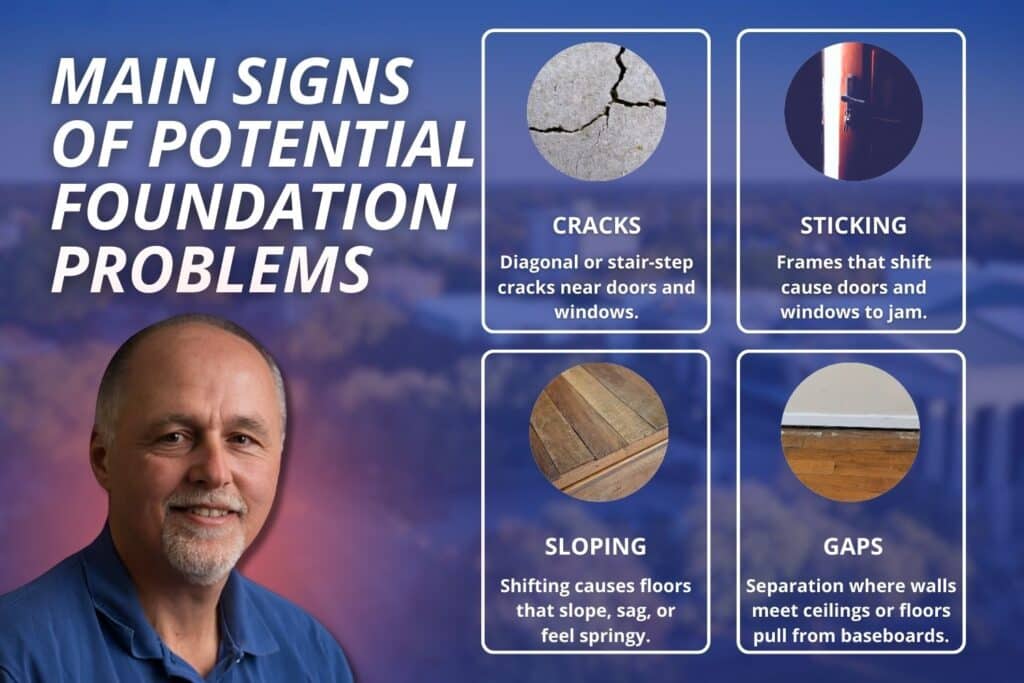
Cracks in Walls, Ceilings, or the Foundation
Not every crack is a red flag, but some are worth paying close attention to:
- Diagonal cracks at the corners of door or window frames
- Stair-step cracks running through brick or mortar joints
- Horizontal cracks in the basement or crawl space walls
- Cracks that are growing, widening, or appearing in multiple areas of the home
Horizontal cracks are the most serious on that list. They point to lateral soil pressure pushing against the wall, which can indicate structural failure if left alone. Small hairline cracks from normal settling are common in older homes and are generally not a cause for concern on their own.
Doors and Windows That Stick or Will Not Latch
When a foundation shifts, the frames above it shift too. Interior doors that suddenly feel stiff, leave uneven gaps, or no longer latch correctly are a common early sign. Windows that jam or show visibly uneven gaps around the frame fall into the same category.
One sticking door in an older home is not necessarily alarming. Multiple sticking doors throughout the home, especially when combined with other signs on this list, are worth investigating.
Uneven or Sagging Floors
Floors that slope, dip in certain spots, or feel springy underfoot often point to movement beneath the surface. In crawl space homes, this can mean settling piers or compromised floor joists. In slab homes, it typically points to the slab shifting.
Gaps Where Materials Meet
Look for visible separation where walls meet ceilings, where floors pull away from baseboards, or where exterior brick separates from window or door trim. These gaps tend to grow slowly, which makes it easy to write them off. They are worth tracking over time.
Moisture in Basements or Crawl Spaces
Not all moisture problems are plumbing problems. When a foundation cracks or shifts, water finds a way in. White chalky deposits on concrete block walls, water staining, and persistent dampness can all be signs that water is entering through or around the foundation, not just through a leaky pipe.
What Causes Foundation Problems?
Understanding what drives foundation issues helps you spot risk before the visible symptoms show up.
- Shrink-swell soil: As covered above, Charlotte’s red clay expands when wet and contracts when dry. That repeated movement is the most common driver of foundation problems in this region.
- Poor drainage: Water pooling near the foundation saturates the soil and speeds up movement. Gutters, downspouts, and yard grading all play a role in managing this.
- Tree roots: Large trees close to the home draw moisture from the surrounding soil, which worsens the shrink cycle during dry seasons.
- Plumbing leaks: A slow underground leak can saturate soil unevenly beneath a slab or crawl space, causing one section of the foundation to settle more than another.
- Age and original construction: Homes built with insufficient footings for local soil conditions become more vulnerable over time. Newer homes are not immune if the soil was not properly prepared before construction.
How Foundation Issues Show Up During a Home Inspection
A home inspection is often where foundation concerns get formally identified and documented. Inspectors evaluate the foundation and structural components for visible signs of movement, water intrusion, and deterioration, both inside and outside the home.
Per InterNACHI’s Standards of Practice, inspectors are required to report observed indications of foundation movement, including sheetrock cracks, brick cracks, out-of-square door frames, and unlevel floors.
Here is what a thorough inspection covers:
| Area | What Inspectors Evaluate |
| Foundation walls | Cracks, bowing, efflorescence, water staining |
| Doors and window frames | Sticking, unlevel, out-of-square alignment |
| Floors | Sloping, soft spots, springiness |
| Interior walls and ceilings | Diagonal and stair-step cracking patterns |
| Crawl space or basement | Moisture, structural supports, and signs of settling |
| Exterior grading | Water drainage direction, pooling near the foundation |
A standard home inspection is visual and non-invasive. When significant concerns are flagged, the inspector will typically recommend a follow-up evaluation by a licensed structural engineer for a more definitive assessment.
Foundation Issues and the Home Buying Process
Buying a home in the Charlotte area without knowing the condition of the foundation is a real financial risk. If an inspection turns up concerns, buyers generally have a few options:
- Request that the seller make repairs before closing
- Negotiate a price reduction to account for estimated repair costs
- Ask for a credit at closing
- Walk away if the damage is severe and the seller won’t negotiate
In any of these scenarios, having a detailed inspection report gives you the documentation and leverage to act. Without it, whatever problems exist become yours the moment you close.
North Carolina requires sellers to disclose known material defects, including foundation issues. But not every seller knows the full scope of what is happening beneath the home. That is exactly why an independent inspection matters regardless of what the seller’s disclosure says.
Other Related Questions to Explore
Does foundation movement affect the rest of the home?
Yes, and it tends to spread. As a foundation shifts, it puts stress on the framing above it. Over time, that shows up in walls, ceilings, roof lines, and even plumbing. A foundation problem rarely stays contained to one area.
Can a brand-new home have foundation issues?
Yes. Builder error, inadequate soil preparation, and subcontractor quality issues can all create foundation problems in homes that have never been lived in. Pre-drywall and new construction inspections are designed to catch structural concerns before the walls are closed in.
Does homeowner’s insurance cover foundation damage?
In most cases, no. Standard policies typically exclude damage caused by soil movement, settling, or drainage issues, which is the most common scenario in this region. Repair costs usually fall entirely to the homeowner, which is why catching problems early matters.
What other inspections should you consider alongside a home inspection?
Moisture that enters through foundation cracks creates ideal conditions for mold growth, often in crawl spaces and basements where it goes undetected. Radon is also worth testing for, since it enters homes through foundation cracks and openings. Both mold testing and radon testing are available as specialty inspections at America’s Choice.
When to Call a Professional
Some situations call for more than a gut feeling. Here is when to take action.
If you are buying a home:
- The inspection flagged foundation movement, sticking doors, or sloping floors
- The seller’s disclosure mentions past repairs, but has no documentation to back it up
- The home has a crawl space or basement with visible moisture or staining
- You are buying an older home in an area with established clay soil conditions
A standard home inspection will document what is visible. If foundation concerns come up, your inspector can point you toward a licensed structural engineer for a deeper assessment. That written report gives you what you need to negotiate repairs, a price reduction, or a closing credit before you sign.
If you already own your home:
- New cracks have appeared, especially diagonal or horizontal ones
- Doors or windows that worked fine before are now sticking
- Floors feel different from what they did a season ago
- You have had significant drought or heavy rain recently
Foundation problems do not stabilize on their own. The longer they go, the more expensive they get.
A home inspection evaluates the visible, accessible components of the home, including signs of foundation movement in walls, floors, doors, and framing. It will not diagnose the root cause of structural issues, but it will tell you if something warrants a closer look from a specialist. That is exactly the kind of early warning that saves homeowners money.
Conclusion
Foundation issues are one of the most consequential things a home inspection can turn up, and in the Charlotte area, the region’s expansive clay soil means they are more common than most buyers expect. The signs are often subtle at first, but subtle does not mean minor. Small problems addressed early are a fraction of the cost of the same problems left to grow.
America’s Choice Inspections has served buyers, sellers, and homeowners across Charlotte and the surrounding Triad and Triangle areas since 2009. If you are preparing to buy or have concerns about your current home, schedule an inspection and get a clear picture of what you are working with.