


Many Charlotte homeowners are surprised to learn that the crawlspace plays a major role when selling a home. When moisture stays trapped, mold can grow on wood framing, insulation, and hidden corners. If you are preparing to sell your house and discover that it’s moldy in the crawlspace, you may wonder whether you can still move forward.
The short answer is yes… but mold almost always becomes an inspection issue. Buyers want to know how much damage there is, how long it has been there, and whether the home has been repaired correctly.
Understanding what mold means for your sale (and how to address it) helps you prepare for the entire process and avoid setbacks.
What Causes Mold in a Crawlspace?
Crawlspaces across North Carolina are prone to moisture. The warm climate, high humidity, and frequent temperature swings make crawlspaces one of the first places mold appears.
Common causes include:
- Poor ventilation
- High humidity levels
- Plumbing leaks
- Groundwater seepage
- Missing or damaged vapor barriers
- Standing water after storms
- Dirty or wet insulation
- Soil grade sloping toward the home
According to the EPA, mold begins growing when moisture stays trapped for only 24 to 48 hours. This makes crawlspaces especially vulnerable during Charlotte’s humid seasons.
How Mold in a Crawlspace Impacts a Home Sale
You can legally sell a home with mold, but mold almost always becomes part of negotiations. Buyers worry about hidden water damage or long-term wood decay. Crawlspaces are one of the most commonly flagged areas during inspections in the Charlotte region.
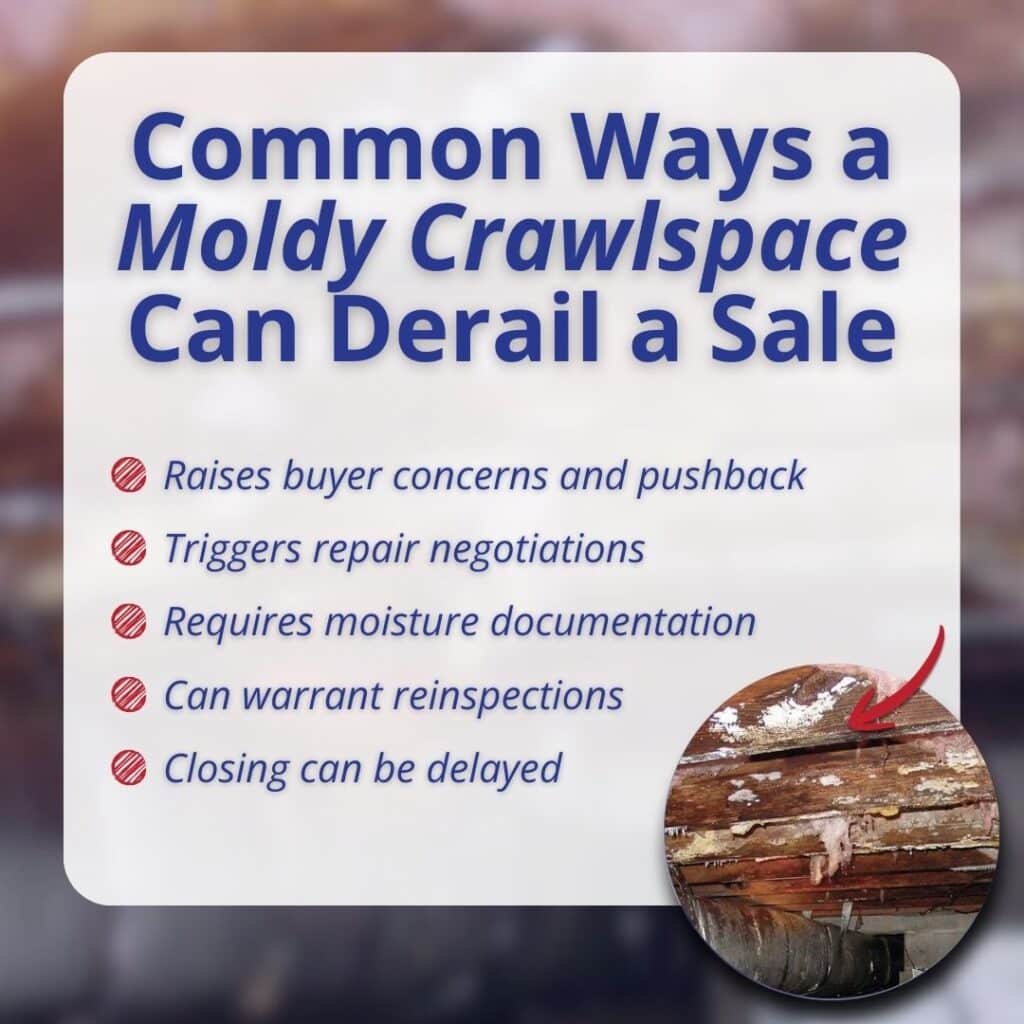
Here is how mold affects the selling process:
- Buyers may request repairs
- Lenders may ask for documentation
- Insurance may require confirmation of moisture control
- The buyer’s inspector may recommend further evaluation
- Mold can raise concerns about untreated water problems
If the crawlspace shows widespread mold, buyers may also ask whether the home has had past drainage issues or HVAC problems. Addressing these concerns early makes the sale smoother.
What Inspectors Look for When Mold Is Found
America’s Choice Inspections performs a full visual review and uses tools such as moisture meters and thermal imaging to assess the area. Inspectors do not perform repairs, but they document conditions that buyers and sellers need to be aware of.
When mold is found, inspectors look for:
- The cause of moisture
- The extent of visible mold growth
- Wet or sagging insulation
- Wood rot or decay
- Ventilation problems
- Plumbing leaks
- Damaged vapor barriers
- Past signs of flooding
They also look for safety concerns, including exposed wiring, open junction boxes, or structural damage caused by long-term moisture.
Is Mold in a Crawlspace Dangerous?
Mold grows in dark, damp areas where moisture stays high. Crawlspace mold is not always a sign of structural failure, but it is a sign that moisture has been present for some time. The bigger concern is the hidden damage that long-term moisture can cause.
Possible risks include:
- Wood weakening from rot
- Reduced insulation performance
- Rust on metal supports
- Musty odors are traveling into the living areas
- Staining or discoloration on joists and subflooring
Research from the North Carolina Department of Environmental Quality shows that homes with moisture problems in crawlspaces often have increased biological growth, pest activity, and energy loss. Mold is usually a symptom of a deeper issue that needs attention.
How Buyers View a Moldy Crawlspace
Most buyers see mold as a red flag. They do not know how long it has been there, whether it caused hidden damage, or whether the home has been properly maintained. When mold shows up in an inspection report, buyers often ask these questions:
- Is the moisture still active?
- Was the mold caused by a leak?
- Will the mold come back?
- Was the crawlspace treated correctly?
- Does the home need drainage improvements?
A moldy crawlspace does not automatically stop a sale. It simply adds more steps. Buyers want assurance that the root cause has been identified and that the home is safe and dry.
How it Affects the Selling Timeline
Mold may extend the selling timeline depending on what repairs are needed. Buyers, lenders, and inspectors may request documentation that the crawlspace has been treated and dried.
Repairs may include improving drainage, installing or repairing a vapor barrier, or addressing ventilation or plumbing leaks.
The average repair time can range from a few days to several weeks, depending on the severity and the contractor’s schedule. Addressing mold before listing often helps sellers move through the sale process with fewer delays.
Why is Crawlspace Mold Common in Charlotte Homes?
Charlotte’s climate creates ideal conditions for crawlspace mold. Warm summers, frequent thunderstorms, and high humidity put constant pressure on the underside of the home.
Seasonal patterns that affect crawlspaces include:
- Heavy rainfall in spring and summer
- Humid air entering open vents
- Cold floors meet warm interior air
- Water runoff pooling near foundations
- Winter condensation under the flooring
Older homes without updated vapor barriers or sealed crawlspaces experience these problems more often.
What Sellers Can Do Before an Inspection
If you know your crawlspace may have mold, there are a few safe steps sellers can take before a home inspection. These do not remove mold, but they make the inspection smoother and help identify the root cause.
You can safely:
- Remove clutter blocking the crawlspace entry
- Ensure access doors are unlocked
- Clear items stored against the foundation
- Check gutters for clogs
- Check for obvious plumbing leaks under sinks
Do not attempt to clean mold yourself. Mold removal should always be handled by a qualified professional trained in containment and moisture control.
How a Home Inspector Evaluates Mold Concerns
During a home inspection, the inspector identifies conditions that support mold and documents visible growth. They look for moisture sources and potential areas where additional evaluation may be needed.
Inspectors use tools such as:
- Moisture meters
- Hygrometers
- Thermal imaging cameras
- Flashlights for surface inspection
These tools help detect moisture behind materials or in areas the eye cannot see. The inspector will include photos, notes, and recommended next steps in the report.
How Thermal Imaging Helps
America’s Choice Inspections uses thermal imaging to help locate hidden moisture. Thermal cameras show temperature differences that often point to water, condensation, or areas where humidity collects.
This kind of imaging helps identify:
- Wet insulation
- Water pooling
- Air leaks
- Damp wood
- Moisture entering from exterior walls
Thermal images do not confirm mold, but they help inspectors understand how moisture moves through the crawlspace.

What To Expect After Mold Is Found
Once mold is documented, the next steps typically include:
- Finding the source of moisture
- Confirming whether the moisture is active
- Reviewing possible repairs with a qualified contractor
- Providing documentation to the buyer, if applicable
In some cases, a buyer may request a follow-up inspection after treatment. Sellers can prepare by keeping receipts, taking photos, and making sure the crawlspace stays dry between treatments.
Does Mold Lower the Value of a Home?
Mold itself does not automatically lower the value, but untreated moisture problems can influence how buyers negotiate. Homes with clean, dry crawlspaces generally move through inspections with fewer questions and concerns.
Factors that may affect value include:
- Extent of the mold
- Age of the home
- Severity of moisture problems
- Required repairs
- Whether the crawlspace has been sealed
Homes that show proper maintenance and clear documentation are more appealing to buyers.
Common Crawlspace Mold Sources and What They Mean
| Problem | What It Suggests | What Inspectors Note |
| Damp insulation | Long-term humidity | Wet insulation or sagging areas |
| Wood discoloration | Possible mold growth | Surface growth and moisture readings |
| Standing water | Drainage or plumbing issues | Active water entry points |
| Rust on metal | Repeated moisture | Corrosion on supports or ducts |
| Musty odors | Poor airflow | Ventilation concerns |
Other Related Questions
Does mold always mean there is a plumbing leak in the crawlspace?
Not always. Many cases are caused by moisture in the soil, poor ventilation, or humidity entering through vents. Plumbing leaks are one possible cause, but not the only one.
How can I tell if crawlspace moisture is an ongoing issue?
Consistent high moisture readings, wet insulation, and musty odors often point to active moisture. Inspectors look for these signs to help determine whether water problems are current or older.
Is sealing the crawlspace a good idea for Charlotte homes?
Many homes in this region benefit from a sealed crawlspace because it helps control humidity, improve air quality, and reduce mold growth. An inspector can help you understand whether conditions in your home make sealing a good option.
When to Call a Professional
Call a home inspector when:
- You are preparing to sell a home
- You suspect moisture in the crawlspace
- There are musty odors indoors
- The insulation looks damp or sagging
- You want a full visual review before listing
- A previous inspection hinted at moisture issues
Inspectors document the extent of visible mold, moisture levels, and conditions that may be contributing to the problem. Their report helps sellers understand what buyers may ask about.
When to Call Someone for Mold Remediation Instead
It’s best to call a qualified mold remediation specialist when:
- Mold has been confirmed in the crawlspace
- Moisture levels stay high after rain
- Water pools under the home
- The vapor barrier is missing or damaged
- Insulation is falling or wet
- Repairs or moisture control steps are needed
Mold remediation specialists handle the treatment, cleanup, and moisture control solutions required to restore the crawlspace and prevent mold from returning.
Conclusion
You can sell a house with a moldy crawlspace, but mold almost always becomes part of the inspection and negotiation process. Understanding what causes mold, how inspectors document it, and what steps come next helps you stay prepared and confident through your sale.
If you are selling a home and want a clear, informed review of your crawlspace before listing, America’s Choice Inspections can help. Schedule your inspection now to understand your home’s true condition and guide your next steps.